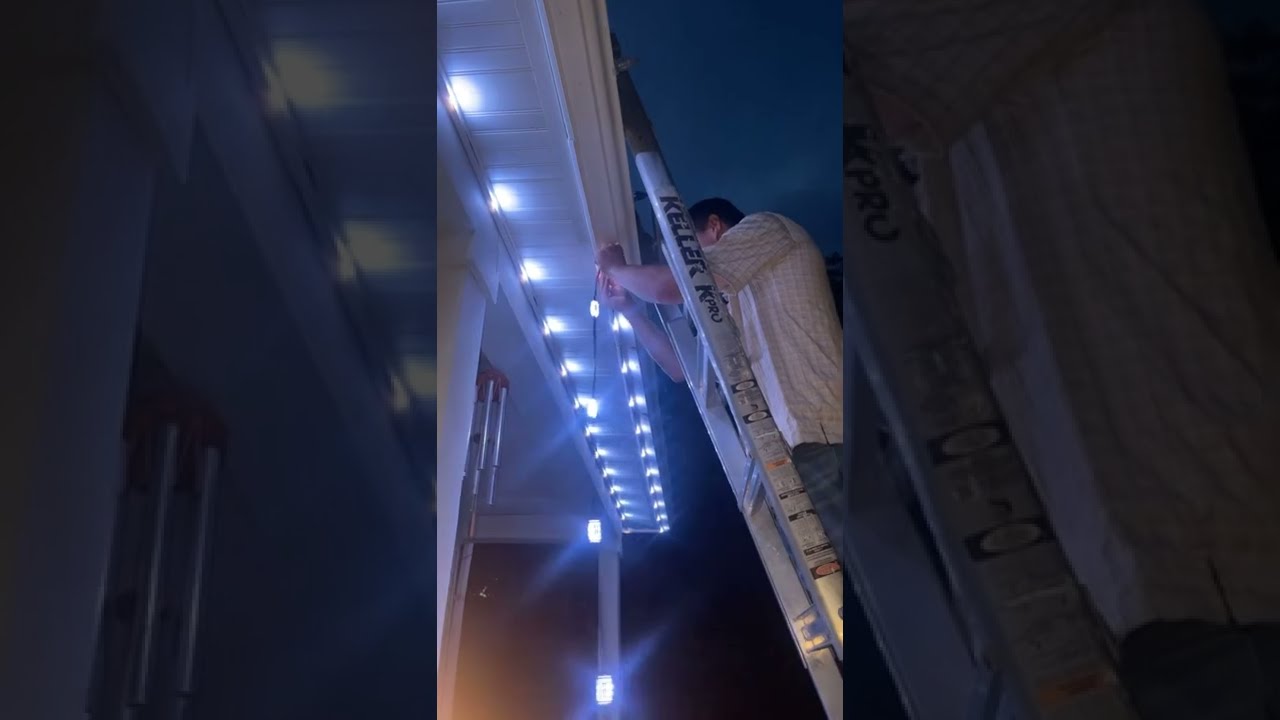
Why Permanent Holiday Lights Are Transforming Home Outside Style
For years, outdoor vacation lights beinged in its own group. It was seasonal, short-term, and typically treated as an afterthought. Property owners drew boxes from the attic room, examined half-working hairs in the driveway, climbed up ladders in winter, after that took every little thing down a couple of weeks later. The lights were cheery, but they were hardly ever component of the style. They embellished a home without truly coming from it.
That distinction is fading fast.
Permanent Holiday Lights have moved from novelty to develop feature, which change is transforming exactly how individuals think of the exterior of a residence. What began as a convenience play has become something a lot bigger. Home owners currently desire lights that works in December, yet likewise in July, during loss football weekend breaks, springtime events, birthday celebrations, graduations, and peaceful evenings on the patio. Building contractors, remodelers, and lights contractors have actually seen. So have designers that appreciate rooflines, fascia information, curb allure, and nighttime presentation.
The outcome is a various conversation regarding exterior style. It is no more almost home siding shade, home window trim, landscaping, and patio fixtures. Lighting has entered into the long-term visual language of the home.
From seasonal decor to architectural element
Traditional holiday lights were constantly noticeable as an add-on. Even when set up nicely, the clips, cables, and mild sag in between accessory factors provided away. That was fine when the goal was short-term party. No one anticipated a seasonal strand to behave like an integrated layout feature.
A well-executed Permanent LED Illumination Setup adjustments that relationship entirely. The lights is generally placed inconspicuously along soffits, fascia, or trim lines, commonly tucked right into networks or concealed in a manner that maintains the daytime appearance tidy. At night, the result is managed and purposeful. The house does not look embellished so much as defined.
That distinction matters. Exterior style is everything about line, proportion, darkness, and focus. During the day, those top qualities originate from materials and type. During the night, lights identifies what the eye notices first. A permanent system permits house owners to map roof heights, accent gables, frame entrances, or clean an exterior with soft color while preserving the structure's geometry. Instead of fighting the design, the lights strengthens it.
I have seen this most clearly on homes with solid rooflines that disappear after sunset. A house can have beautiful dormers, a balanced front elevation, and very carefully selected trim, but once darkness falls, every one of that job declines right into black space. Permanent illumination gives those forms a 2nd life. It turns nighttime from a blank period right into part of the design experience.
The aesthetic shift property owners in fact want
One factor this group has actually expanded so quickly is that the look has actually grown. Early adopters typically wanted bright, highly saturated displays due to the fact that the technology made that possible. Some still do, and there is certainly a market for bold color animations and event-based styles. Yet the larger layout pattern has actually moved in an extra controlled direction.
Many home owners want nuance. They desire a system that can celebrate vacations, however a lot of the year they prefer something better to sophisticated accent lighting. That is where tones like Timeless Cozy Soft Lights have ended up being particularly significant. Cozy whites and low-intensity brownish-yellow tones rest more conveniently with brick, all-natural rock, discolored wood, and soft paint colors than stark amazing white ever before did. On standard homes, they can feel practically timeless. On newer builds, they include warmth that contemporary facades sometimes lack after dark.
This change mirrors what occurred indoors years earlier. People quit thinking of illumination as a basic energy and started treating it as environment. The very same point is taking place outside. A house owner might make use of red and environment-friendly in December, team colors on game day, orange in October, and after that resolve into cozy white for daily use. That flexibility makes the system useful, but the enduring influence originates from the understated settings, not the novelty scenes.
Design-wise, this modifications assumptions. If an illumination system is mosting likely to remain on the home year-round, it can not look economical or temporary. It has to work with the product scheme. It has to respect range. On a single-story cattle ranch, over-lighting can flatten the exterior and make it really feel visually hectic. On a tall, narrow two-story with multiple gables, a sparse design can leave the house looking incomplete. Long-term systems require an even more thoughtful design technique since they are constantly present, also when they are barely visible.
Curb allure now includes nighttime visual appeal
Real estate experts have actually discussed visual charm for years, however the majority of people still think about it as a daytime concept. Fresh compost, pressure-washed sidewalks, cut bushes, and a tidy front door do the hefty lifting. Permanent outside illumination includes one more layer: aesthetic allure after sunset.
That matters more than it made use of to. Individuals get back at night for much of the year. Neighbors stroll dogs in the evening. Guests frequently very first see a home at night, not at twelve noon. A building that reviews clearly and warmly after dark feels much more finished and extra cared for.
Permanent lights can additionally address a sensible design issue that typical veranda lights hardly ever address. A solitary fixture at the front door creates a tiny pool of lighting and a great deal of surrounding darkness. Landscape lights help, however they generally focus low, on paths and growing beds. Roofline lights specifies the full rundown of the home and offers the facade depth. It makes the entire framework legible.
When it is succeeded, the impact is not loud. The best installations commonly look easy. A passerby might not quickly notice the system itself. They simply discover that your house really feels more total during the night. That is normally the characteristic of excellent outside layout. The function enhances the entire make-up without requiring interest every second.
The modern technology has actually lastly caught up with the idea
The concept of irreversible exterior lighting is not all new. What is new is the top quality of the hardware, controls, and setup methods now available. Earlier systems typically looked clunky, aged badly, or did not have sufficient versatility to justify the expense. Today's much better systems are smaller, a lot more resilient, and even more programmable.
That development has broadened their design role. Homeowners can set up scenes, dark strength, select from a wide color variety, and change from joyful to underrated without touching a ladder. Some systems can organize areas of your house individually, which matters on larger homes where one lights therapy must not cover the whole appearance uniformly. A front altitude may require a various method from a side roofline or backyard enjoyable area.
From a design viewpoint, control is every permanent Christmas lights installation little thing. Illumination that can not be decreased is a trouble. Color that can not be softened is a problem. A system that only looks great throughout holidays is an issue. Much better technology has made it possible to install as soon as and utilize in many settings, which is precisely why engineers and outside professionals are taking it more seriously.
Still, the modern technology year round permanent led lighting just helps if the design and setup are disciplined. I have actually seen expensive systems weaken otherwise eye-catching homes since every line was lit at full outcome. Much more light is not the like far better light. The objective is pecking order. Your house must have centerpieces, not aesthetic shouting.
Why designers, home builders, and remodelers are paying attention
Permanent illumination used to be something property owners taken into consideration after relocating. Progressively, it is being gone over throughout layout, construction, or major outside remodelling. That is a purposeful shift.
Builders like it since it creates a costs attribute that buyers comprehend quickly. Remodelers like it due to the fact that it sets naturally with brand-new soffits, rooflines, exterior siding tasks, and trim replacement. Designers like it when they can make up component placement early and protect a clean facade. Homeowners like it because retrofitting is not their only alternative anymore.
When lights is taken into consideration in the planning stage, numerous points boost. The aesthetic assimilation is better because mounting details can be concealed extra elegantly. Power and control locations can be picked wisely. The installer can function around water drainage, venting, and trim transitions rather than improvisating around ended up surface areas. Even maintenance often tends to be simpler when the system has actually been analyzed from the start.
This is where Long-term LED Lights Setup becomes more than a product acquisition. It enters into the envelope and discussion method of the home. That does not indicate every home requires it, but it does indicate the classification currently belongs in the exact same discussion as outside paint, garage door style, landscape planning, and front access upgrades.
Style, restriction, and the homes that benefit most
Not every home wears permanent illumination similarly well. Some facades almost invite it. Others require a lighter touch.
Homes with clear roof geometry have a tendency to profit the most. Think of colonials with balanced lines, craftsman homes with layered gables, modern-day farmhouses with strong eaves, and modern builds with crisp sides. These forms give lighting a course to adhere to. The style provides order, and the lights magnifies it.
More complex facades can still look outstanding, yet they require judgment. A house with several converging rooflines, several bump-outs, and differed products can become visually chaotic if every side is illuminated. In those instances, selective illumination functions better. Accentuating the major ridgeline and entrance quantity may produce a more powerful result than tracing every contour.
Historic homes need a lot more treatment. The inquiry is not simply whether lighting can be installed, however whether it needs to announce itself in any way. On some traditional homes, especially those with mature landscaping and duration information, a quiet warm-white strategy fits wonderfully. On others, visible color changes and animation can feel out of action with the personality of the style. Taste issues here, and so does area context.
One of the largest false impressions is that irreversible vacation systems are inherently fancy. They can be, of course. Yet that says even more regarding programming selections than the system itself. Made use of attentively, they are as much about refined nightly atmosphere as celebration.
The convenience tale is actual, however it is only part of the appeal
The toughest sales pitch most home owners hear first is benefit. No annual ladder job. No twisted strands. No burned-out areas. No clips left in gutters. No shuffle when climate transforms cool. Every one of that is true, and for many families it is factor enough.
But benefit alone does not explain why this category is influencing design. Lots of beneficial products never ever transform the means homes look. Irreversible lights is different because it resolves a trouble while additionally developing a new visual possibility. That combination is powerful.
There is also a safety angle that ought to not be lessened. Seasonal roofline lights has constantly included threat. Also careful homeowners are still on ladders, often in inadequate climate, typically hurrying. The cost of an irreversible system requires to be evaluated against that annual regimen. For some homes, specifically older house owners or hectic households that contract out vacation installation every year, the long-term worth becomes much easier to see.
Even so, I would warn versus watching it as a global cash saver. The business economics rely on your house, the regional labor market, the kind of system, and exactly how often the homeowner actually uses it. A moderate one-story home might have a different repayment story than a big custom develop with complex rooflines and substantial programming. It is better to think about long-term lights the way individuals think of an integrated outside cooking area or upgraded landscape lights. It adds function and experience initially, with cost savings sometimes complying with depending upon the situation.
Where inadequate installation can harm the design
Because these systems are ending up being much more prominent, a lot more installers are getting in the market. That is not constantly excellent information. Outside lighting is unforgiving. A weak set up does not remain hidden.
The common failures are predictable. Visible electrical wiring breaks the tidy daytime look. Improperly straightened components make the roofline appear wavy. Inconsistent spacing produces hot spots and dead zones. Mounting approaches that do not regard water monitoring can create larger problems than the lights themselves. The wrong color temperature can make a stunning facade appearance level, rough, or strangely commercial.
An excellent installer understands both electric integrity and visual composition. They need to discuss sightlines, trim detail, daytime concealment, brightness control, and service access. If the whole discussion is almost app features and color options, that is a warning sign. The installment requires to serve your house, not the other way around.
Here are a few questions worth asking prior to moving forward:
- How visible will the track, cord, or component body be during the day?
- What brightness range functions best for day-to-day use, not simply holiday settings?
- How will the system connect with existing deck, landscape, and security lighting?
- What occurs if a section falls short, and just how simple is it to service?
- Can the installer program instances on homes with comparable design and materials?
Those questions often tend to separate design-minded specialists from sales-first operators.
Neighborhood personality and the new rules of outside lighting
As extra homes embrace long-term systems, area standards are changing as well. That has layout ramifications over one's head property line.
In some locations, these lights have actually become part of a more comprehensive move toward curated outside environments. People purchase hardscaping, accent illumination, upgraded garage doors, and covered outdoor patios, after that see long-term roofline lighting as the ending up piece. In various other communities, the exact same system can watch out of place if many homes are understated and dark after 9 p.m.
This is where rules and style overlap. Even if a system can do intense shade goes after at high illumination does not indicate it needs to every night. Home owners that make use of permanent illumination well have a tendency to recognize context. They lower it. They schedule bolder scenes for actual occasions. They know when cozy white is enough.
That sensitivity issues for another factor: overuse can create reaction. If permanent lighting becomes associated just with excess, some house owners and HOAs will certainly withstand it. If it is viewed as attractive, adaptable, and architecturally respectful, it will keep obtaining acceptance as a reputable exterior design tool.
Energy use, durability, and the practical side of year-round lighting
LED systems are efficient, yet effectiveness does not get rid of the need for good sense. Running a permanent system every night at full brightness for extended periods is various from utilizing dimmed accent scenes for a few night hours. Consumption differs by system dimension and setups, so broad claims must be treated carefully.
Durability likewise depends upon setting. Coastal air, intense sunlight, freeze-thaw cycles, and heavy storms all tension outside components. Much better systems are constructed for those conditions, but no item is immune to bad installation or disregard. House owners need to anticipate occasional upkeep, software updates, or component substitute for many years. Permanent does not indicate maintenance-free. It means dealt with in place and created for long-lasting use.
That claimed, many individuals are stunned by how inconspicuous these systems can be when installed properly. From the aesthetic in daytime, a well-matched channel under the soffit often goes away unless you recognize to search for it. At night, the lights turn on a component of the home that utilized to go visually inactive. That improvement is what maintains the group growing.
Why this trend is likely to stick
Some home upgrades ride a wave of excitement and after that fade. Irreversible Vacation Lights do not look like among those fads. They rest at the junction of convenience, safety and security, customization, and style, which provides unusual staying power.
More notably, they respond to an actual adjustment in how homeowners utilize their outsides. Outside living is no more just a summertime concept. Front frontages are anticipated to really feel welcoming year-round. Amusing prolongs into nights. Households desire the capability to change a home's state of mind without physically redecorating it every time the schedule changes.
The best indicator that this trend is long lasting is that the best installments barely read as trend-driven. They review as taken into consideration layout. A home outlined in Timeless Warm Soft Lights on a winter season night does not really feel newfangled. It feels made up. A meticulously intended Permanent LED Lighting Installment that highlights style, supports security, and gives a home owner seasonal flexibility is doing much more than changing a box of string lights.
It is redefining what a finished exterior can be.
As that idea spreads, even more homes will certainly be designed with nighttime identity in mind from the very start. For architects and builders, that modifications planning. For service providers, it raises the bar on implementation. For house owners, it opens up a new group of expression that was not functional a decade ago.
The bigger shift is simple: lights is no longer simply decoration applied to the beyond the home. It has actually become part of the home's exterior style itself. And once individuals see what that appears like when it is done well, it is hard to go back to a few short-lived hairs and a cold weekend on a ladder.